Connected eBus Fleet
Background
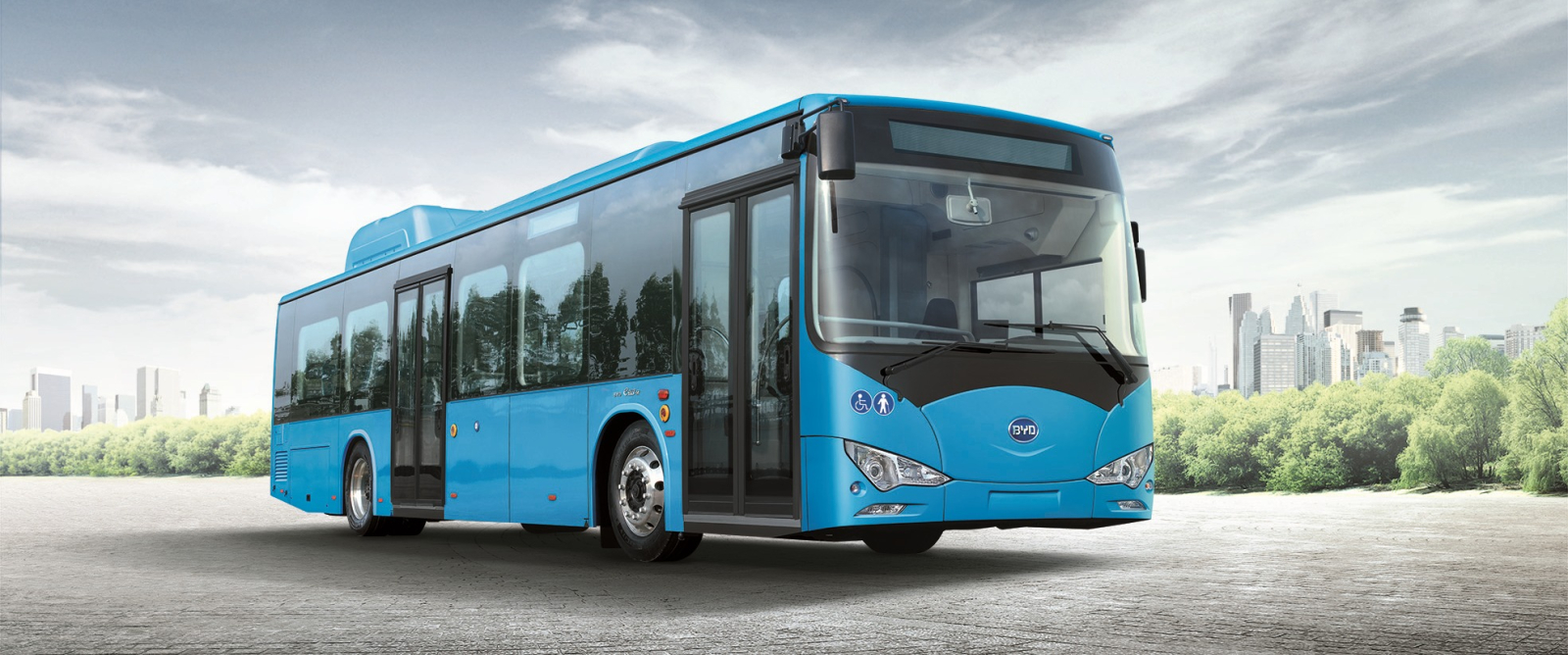
Bogotá's public transport system is undergoing a major electrification initiative powered by a fleet of BYD electric buses (eBuses). As the city transitions away from diesel-powered vehicles, operators require not only a sustainable drivetrain but also a modern, connected on-board environment to improve passenger experience and fleet operations.
Each eBus must deliver real-time passenger infotainment — including route maps, next-stop announcements, and multimedia content — while simultaneously transmitting vehicle telemetry, GPS positioning, and live video surveillance footage to a central operations center. The sheer scale of the deployment (1000 vehicles operating across Bogotá's extensive urban and peri-urban network) demands a robust, centrally manageable, and highly reliable communications platform.
Advantech was selected as the connectivity partner to supply industrial-grade cellular routers capable of meeting the demanding requirements of a fully connected eBus fleet in a dense, high-traffic metropolitan environment.
System Requirements
- Continuous WAN connectivity: Reliable dual-SIM LTE/4G cellular uplink for continuous vehicle-to-cloud data transmission, with automatic failover between carriers.
- Multi-radio support: Support for LTE, GNSS/GPS positioning, and Wi-Fi (passenger hotspot and maintenance access) in a single integrated device.
- On-board video surveillance: Streaming of video from MDVR (Mobile Digital Video Recorder) cameras installed inside and outside each bus to a central server.
- Passenger infotainment delivery: Distribution of multimedia content, upcoming station information, and route data to a 24" passenger display via HDMI and to an audio infotainment system via stereo output.
- Real-time GPS tracking & fleet telemetry: Transmission of real-time GPS coordinates and vehicle telemetry data (via RS232) to the Bogotá dispatch platform.
- Third-party system integration: RS485 integration with the existing on-board routing system for route and schedule data.
- Fleet-wide remote management: Centralised remote configuration, firmware updates, monitoring, and diagnostics across all 1000 vehicles via a cloud platform.
- Rugged, automotive-grade hardware: Industrial-grade hardware tolerant of vibration, temperature extremes, and continuous 24/7 operation.
System Description
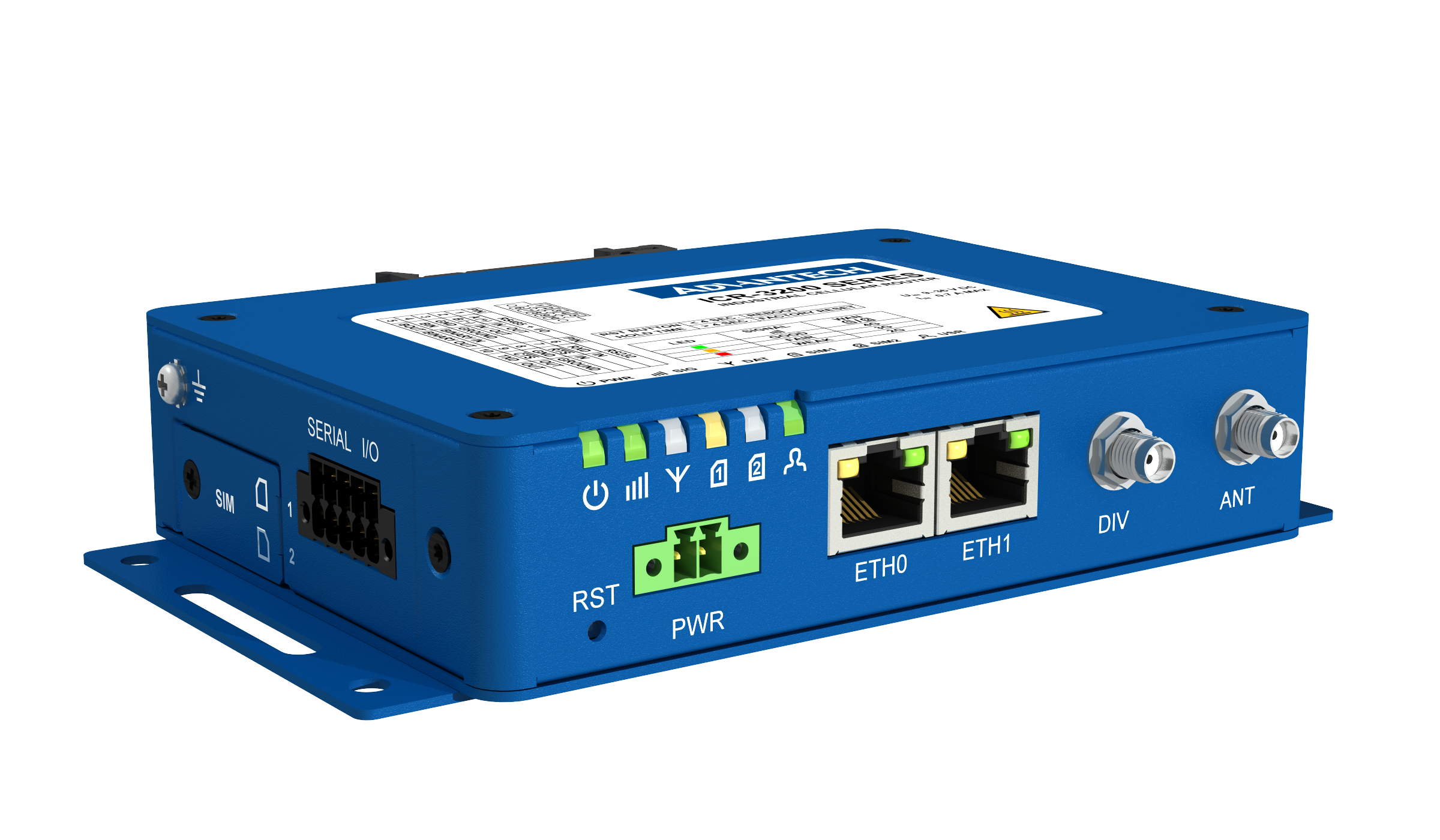
The solution is built around the Advantech ICR-3232W industrial cellular router - a compact, dual-SIM LTE device with integrated GPS/GNSS and dual-band Wi-Fi. With 1000 units deployed fleet-wide, the ICR-3232W acts as the central communications hub aboard each BYD eBus, interconnecting all on-board subsystems over a unified IP network.
Each router provides the following capabilities:
- Cellular connectivity (LTE/4G, dual-SIM): Dual-SIM LTE failover ensures the bus remains connected even when one carrier experiences coverage gaps in tunnels or dense urban canyons.
- GNSS/GPS positioning: Integrated GNSS module delivers precise latitude/longitude data, which is forwarded via the router to the central dispatch system for real-time fleet positioning and route adherence monitoring.
- Dual-band Wi-Fi: A dedicated Wi-Fi radio serves both the passenger-facing hotspot network and a secured maintenance SSID used by technicians for local diagnostics.
- Video surveillance (MDVR integration): The router connects via Ethernet to a video/audio server on board the bus. This server processes feeds from interior and exterior MDVR cameras, encodes them, and streams the footage over the LTE uplink to the central operations center for security monitoring and incident review.
- Passenger infotainment (video + audio): The video/audio server outputs passenger infotainment content to a 24" cabin display (via HDMI 2.0 on the server) and drives the bus audio system with next-stop announcements and ambient audio. Content (station names, route maps, schedules) is pushed remotely to each bus over the LTE connection.
- Serial interfaces (RS485 / RS232): The router interfaces with the on-board routing system via RS485 (proprietary protocol) and with the MDVR via RS232, enabling exchange of route, schedule, and vehicle diagnostics data.
- Remote signal prioritisation: A third-party remote prioritisation signal is exchanged between the bus router and the central ICR-3200 infrastructure router, enabling dynamic traffic signal priority requests as the bus approaches intersections.
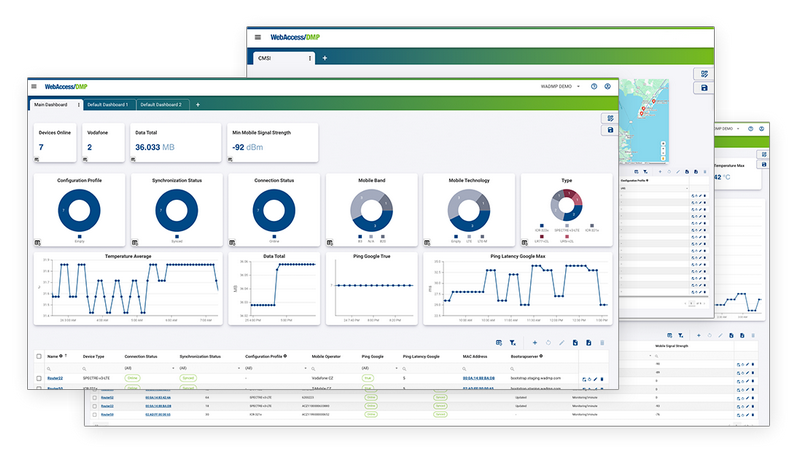
All 1000 routers are centrally managed through the WebAccess/DMP cloud platform, enabling zero-touch provisioning, remote firmware updates, configuration push, real-time status monitoring, and alert management - without requiring physical access to any vehicle.
Project Implementation
The deployment was carried out in close collaboration between Advantech, the system integrator, and the fleet operator. Advantech supplied the ICR-3232W routers and provided technical guidance throughout the integration and commissioning phases.
- Hardware supply & pre-configuration: ICR-3232W routers were pre-configured with standard templates before delivery, minimising on-bus installation time. Each unit was fitted with two SIM cards from different Colombian LTE carriers to guarantee maximum geographic coverage.
- On-board installation: The integrator mounted the router in the bus electrical cabinet and connected it to the MDVR, the video/audio server, the routing system (RS485), and the passenger display. The router's Ethernet ports provided LAN connectivity to the server, while RS232 and RS485 interfaces handled serial device communication.
- Zero-touch provisioning via WebAccess/DMP: Upon first power-on, each router automatically connected to WebAccess/DMP, downloaded its operating configuration, and registered with the central fleet management platform - eliminating manual per-vehicle setup at scale.
- Fleet tracking integration: Live GNSS data is forwarded from each bus to the dispatch platform, giving operators a continuously updated view of all 1000 vehicles on a city map with route adherence metrics.
- Video surveillance rollout: All 1000 cameras streams are aggregated at the central video server over the LTE uplinks. Operators can pull recorded footage on demand or receive automated alerts triggered by the MDVR's onboard analytics.
- Infotainment validation: Passenger-facing Wi-Fi, infotainment content delivery, and audio announcements were tested across a pilot batch of 50 buses before full fleet rollout, with content management handled remotely via the central server.
System integration, in-vehicle wiring, and operator training were managed by the customer's designated integrator, ensuring a smooth, phased rollout with minimal disruption to daily bus operations.
Conclusion
The deployment of 1000 ICR-3232W routers across Bogotá's BYD eBus fleet demonstrates how industrial cellular connectivity can simultaneously support multiple mission-critical applications - fleet tracking, passenger infotainment, video surveillance, and vehicle diagnostics - within a single, compact on-board device.
By consolidating LTE, GNSS, and Wi-Fi into one platform and managing the entire fleet through WebAccess/DMP, the operator benefits from dramatically reduced operational overhead, predictable remote management, and a scalable foundation ready for future services.
The project positions Bogotá as a regional reference for smart, connected urban electric mobility - and demonstrates Advantech's capacity to deliver large-scale, mission-critical IoT deployments in demanding public transport environments.

.png)